
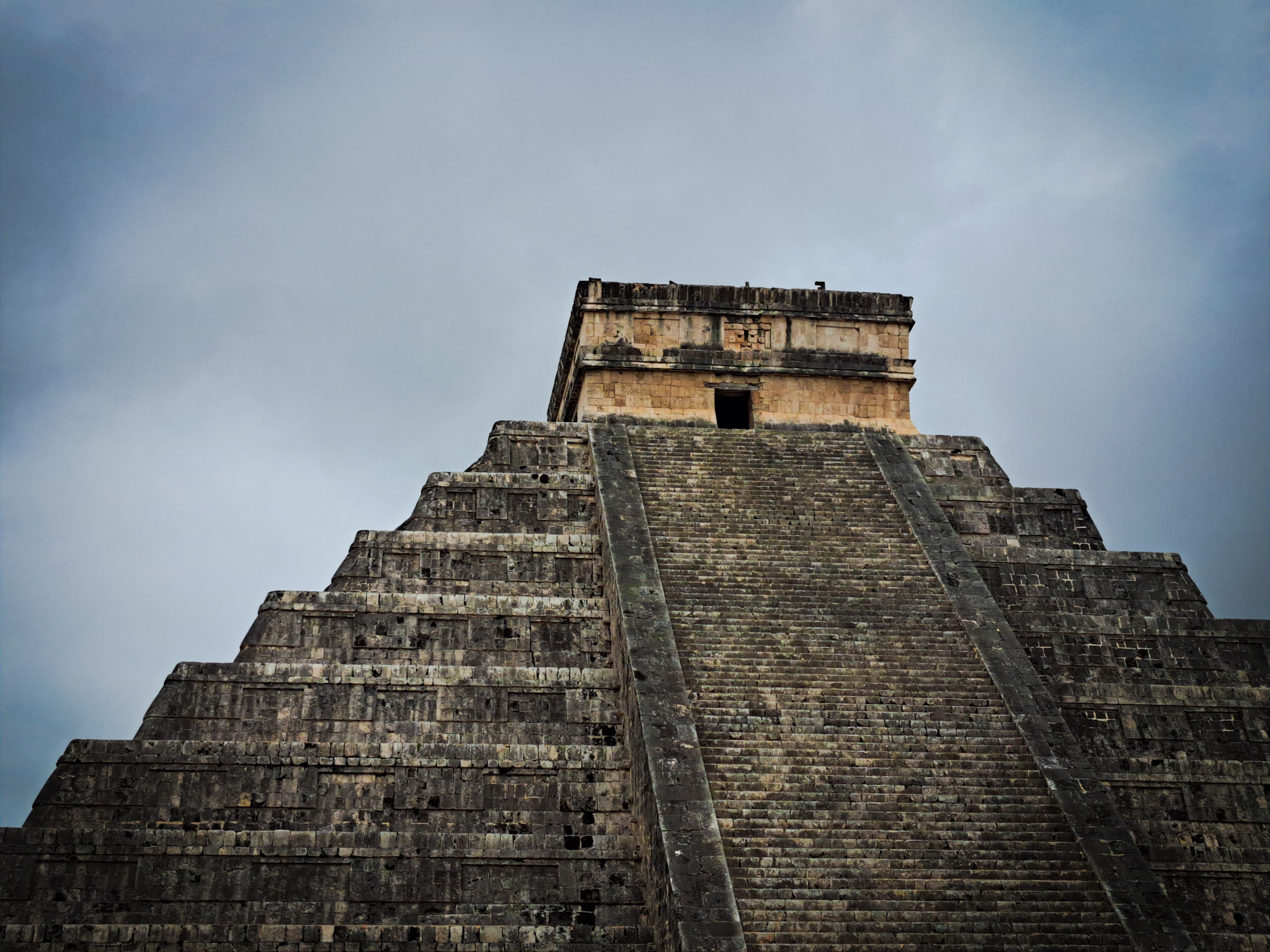
Chichén Itzá is the best-known Maya city in Mexico and the most popular day trip from Cancun. It lies in the state of Yucatán, about 200 km west of Cancun, and its great pyramid – the Temple of Kukulcán, or El Castillo – is one of the most photographed monuments in the Americas. This guide covers what you’ll see, how to get there, the 2026 ticket prices, opening hours, the equinox and the night show, plus cenotes and Valladolid nearby.
At a glance
- Where: next to the village of Pisté, Yucatán, about 200 km west of Cancun; about 2 to 2.5 hours by car on the toll highway.
- Tickets 2026: 697 MXN for foreign visitors, 310 MXN for Mexicans, 105 MXN for Yucatán residents.
- Hours: daily 8:00 am – 5:00 pm, last entry 4:00 pm.
- Status: UNESCO World Heritage Site (1988) and one of the New Seven Wonders of the World (2007).
- Good to know: the pyramid cannot be climbed; there is little shade, so go early.
What is Chichén Itzá?
Chichén Itzá was one of the largest Maya cities of the northern Yucatán Peninsula. Its name is usually translated as “at the mouth of the well of the Itzá”, a reference to the Sacred Cenote. The city flourished between roughly the 9th and 12th centuries, and its buildings mix classic Maya styles with features from central Mexico, such as the feathered serpent Kukulcán. UNESCO added it to the World Heritage List in 1988, and in 2007 it was voted one of the New Seven Wonders of the World.
Main structures
- Temple of Kukulcán (El Castillo): the stepped pyramid in the main plaza. Each of its four stairways has 91 steps; with the top platform they add up to 365, the days of the solar year.
- Great Ball Court: the largest ball court in Mesoamerica, with carved panels showing players and stone rings high on the walls.
- Temple of the Warriors and the Group of a Thousand Columns: rows of carved columns and a Chac Mool figure at the top of the temple.
- El Caracol (the Observatory): a round building with a spiral staircase inside, linked to astronomical observation.
- Sacred Cenote: a large natural sinkhole north of the main plaza, reached by a causeway, where offerings were thrown into the water.
- Tzompantli and the Platform of Venus: a platform carved with rows of skulls and a smaller ceremonial platform next to El Castillo.
- Las Monjas (the Nunnery) and the Osario: an elaborately decorated palace complex in the south part of the site and a smaller pyramid sometimes called the High Priest’s Grave.
The older southern area known as Serie Inicial (Chichén Viejo) has its own access times; ask at the entrance.
How to get to Chichén Itzá from Cancun
Tour
The easiest option. Most day tours from Cancun leave early, include transportation, a guide and often a cenote swim, lunch and a stop in Valladolid. Check what is included: many tours include the entrance fee, but not all. See the Chichén Itzá Tour and other tours listed on our site.
Rental car
The site is about 200 km from Cancun, about 2 to 2.5 hours on toll highway 180D (Cancún–Mérida), leaving at the Chichén Itzá / Pisté exit. Tolls are paid at the booths; in 2026 the Valladolid–Cancun stretch alone costs 427 MXN for a car, so budget for tolls both ways. The official parking lot at the site costs 124 MXN per car (since May 2026). Driving lets you arrive at 8:00 am, before the tour buses.
ADO bus
ADO runs buses from the Cancun bus terminal downtown towards Chichén Itzá and Valladolid. The direct trip takes about 3 to 4 hours, so check the timetable and buy tickets at ado.com.mx; another option is a bus to Valladolid and a colectivo or taxi from there.
Tren Maya
The Tren Maya stops at a Chichén Itzá station near Pisté, with trains from the Cancún Aeropuerto station taking a little over 2 hours. Departures are limited and change, so check the current timetable and how you will get from the station to the site before you go.
Chichén Itzá tickets 2026
You pay two fees at the ticket office: the federal INAH ticket and the Yucatán state fee. The state fee is much higher for foreign visitors.
| Visitor | INAH (federal) | Yucatán state fee | Total |
|---|---|---|---|
| Foreign visitors | 105 MXN | 592 MXN | 697 MXN |
| Mexican nationals | 105 MXN | 205 MXN | 310 MXN |
| Yucatán residents | 105 MXN | – | 105 MXN |
- Sundays: free entry for Mexican nationals and foreign residents of Mexico with ID – which makes Sunday one of the busiest days. Foreign visitors pay the normal rate every day.
- Exemptions: INAH lists free entry for people over 60 and under 13, people with disabilities, active teachers and students with Mexican credentials, and accredited guides at work. Check at the booth which exemptions also apply to the state fee.
- Filming: personal photos are free; non-professional video recording costs 63 MXN. Drones, tripods and professional equipment need an INAH permit.
- Payment: bring pesos in cash as a backup; there is no guarantee that card terminals will be working.
Opening hours
Chichén Itzá is open every day from 8:00 am to 5:00 pm. Last entry is at 4:00 pm, and staff start clearing the site at 4:30 pm. Arrive at opening time for the coolest temperatures and the emptiest plaza – most tour buses arrive from late morning. Allow at least two to three hours to see the main areas.
The equinox at Chichén Itzá
Around the spring and autumn equinoxes (about March 20–21 and September 22–23), the late-afternoon sun casts seven triangles of light and shadow on the north stairway of El Castillo. Together with the serpent head at the base, they look like a serpent descending the pyramid. The effect is visible from about 3:00 to 5:00 pm on the days around the equinox, not only on the exact date.
The spring equinox draws very large crowds, and INAH runs special hours and stricter bag checks. If you go, arrive early, expect long lines and bring water and sun protection. If you’d rather avoid the crowds, visit on another day.
Noches de Kukulcán night show
The Yucatán state government runs Noches de Kukulcán, a night tour and video-mapping show projected on El Castillo. According to the state’s official listing, it takes place Wednesday to Sunday with one show at 7:00 pm (capacity 600). In 2026 the ticket costs 1,163 MXN (state fee plus INAH), or 730 MXN for Mexican nationals on Sundays; it applies from age 4. The night show is a separate ticket from daytime entry, and the narration is in Spanish. Tickets are sold online at nochesdekukulkan.com.mx and at the site. Shows can be cancelled for weather, so confirm the date before you plan around it.
What to bring
- Mexican pesos in cash for tickets, parking, food and souvenirs.
- A hat, sunglasses and sunscreen – the main plaza has almost no shade.
- Plenty of water and comfortable walking shoes.
- Swimwear and a towel if you’ll visit a cenote afterwards.
- ID if you qualify for a reduced or free rate.
- Leave drones, tripods and alcohol behind; bags are checked.
Nearby cenotes and Valladolid
Cenote Ik Kil, a deep round cenote with hanging vines and a staircase down to the water, is only a few minutes’ drive from Chichén Itzá and is a stop on many tours. Other cenotes along the road to Valladolid make a good swim after a hot morning at the ruins. Check the cenote’s own rules before you go: many require you to shower first and ask you not to use sunscreen in the water.
Valladolid, a colonial town about 40 km east of Chichén Itzá, has a central square, the Church of San Servacio, the San Bernardino convent and Cenote Zací right in town. It is a good place for lunch on the way back to Cancun, or for an overnight stay so you can be at Chichén Itzá at opening time. From Valladolid, Ek Balam is about 27 km to the north.
FAQ
How much does it cost to enter Chichén Itzá in 2026?
697 MXN for foreign visitors (105 MXN INAH ticket plus 592 MXN Yucatán state fee), 310 MXN for Mexican nationals and 105 MXN for Yucatán residents. Mexican nationals and residents enter free on Sundays.
How long is the drive from Cancun to Chichén Itzá?
Chichén Itzá is about 200 km from Cancun – about 2 to 2.5 hours by car on toll highway 180D. The ADO bus takes about 3 to 4 hours.
What are the opening hours?
Every day from 8:00 am to 5:00 pm, with last entry at 4:00 pm. The Noches de Kukulcán night show runs separately, Wednesday to Sunday at 7:00 pm.
Can you climb the pyramid at Chichén Itzá?
No. Climbing El Castillo has not been allowed for many years, and visitors who climb it face fines. If you want to climb a pyramid, Cobá’s Nohoch Mul reopened for climbing in December 2025 – see our archaeological sites guide.
When is the best time to visit?
Arrive at 8:00 am, ideally on a weekday. The dry, slightly cooler months from about November to March are the most comfortable. The spring equinox is spectacular but very crowded.
Is a tour or driving better?
A tour is easiest: no driving, a guide, and usually a cenote and Valladolid in one day. Driving gives you the freedom to arrive at opening time and stay as long as you want.