

If you’ve ever stood in the immigration line at Cancun International Airport (CUN), you’ve probably felt like half the world decided to visit the Mexican Caribbean at the exact same moment. And technically, you wouldn’t be far off.
The recently released January 2026 report from Aeropuertos del Sureste (ASUR) confirmed news that has the tourism industry celebrating: Cancun has recorded the second-busiest January in its history regarding international passengers. With a 2.5% growth compared to last year, the terminal moved more than 2.15 million foreign travelers in just 31 days.
How does a single airport manage to move so many people while the rest of the world is barely shaking the sand out of their shoes? Here is everything you need to know, packed with fun facts that will make you see this terminal in a whole new light.
The January Phenomenon: Why is everyone coming now?
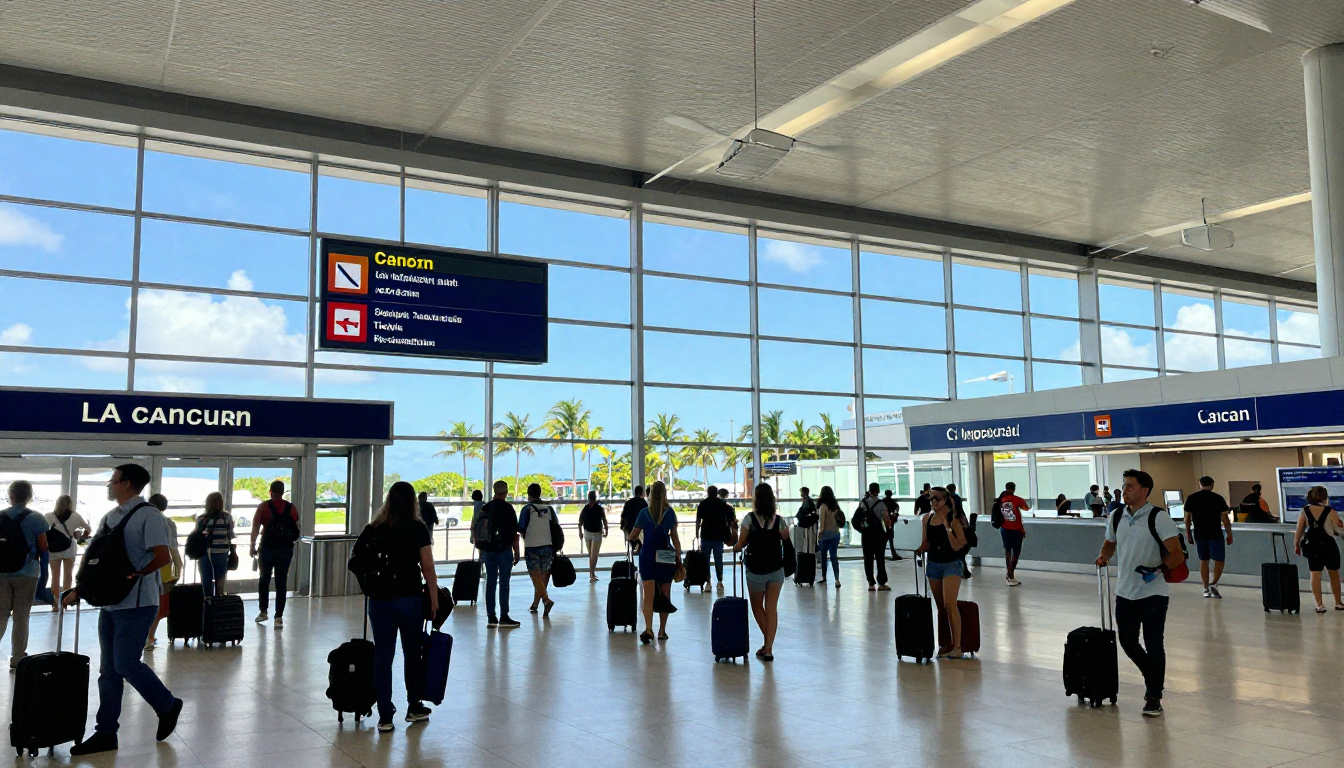
January is the ultimate “escape” month. While the Northern Hemisphere freezes under layers of snow, Cancun offers a 28°C (82°F) sun that feels like a warm hug. But this year, there was something special in the air.
While domestic traffic (travelers within Mexico) saw a slight dip, the international market flexed its muscles. This surge of 2,155,217 international passengers places January 2026 just behind the all-time historic record of 2023.
Where is everyone coming from?
It’s no surprise that the United States and Canada remain the kings of the flow. However, there’s a curious trend: connectivity with Europe and South America has matured so much that the airport no longer depends solely on “Spring Breakers” or traditional winter breaks. It has evolved into a truly global hub.
Fun Facts You (Probably) Didn’t Know About Cancun Airport
To understand the scale of being the “second-busiest January,” you have to look under the hood of this massive tourism machine:
Two runways that don’t “talk,” but perfectly coordinate
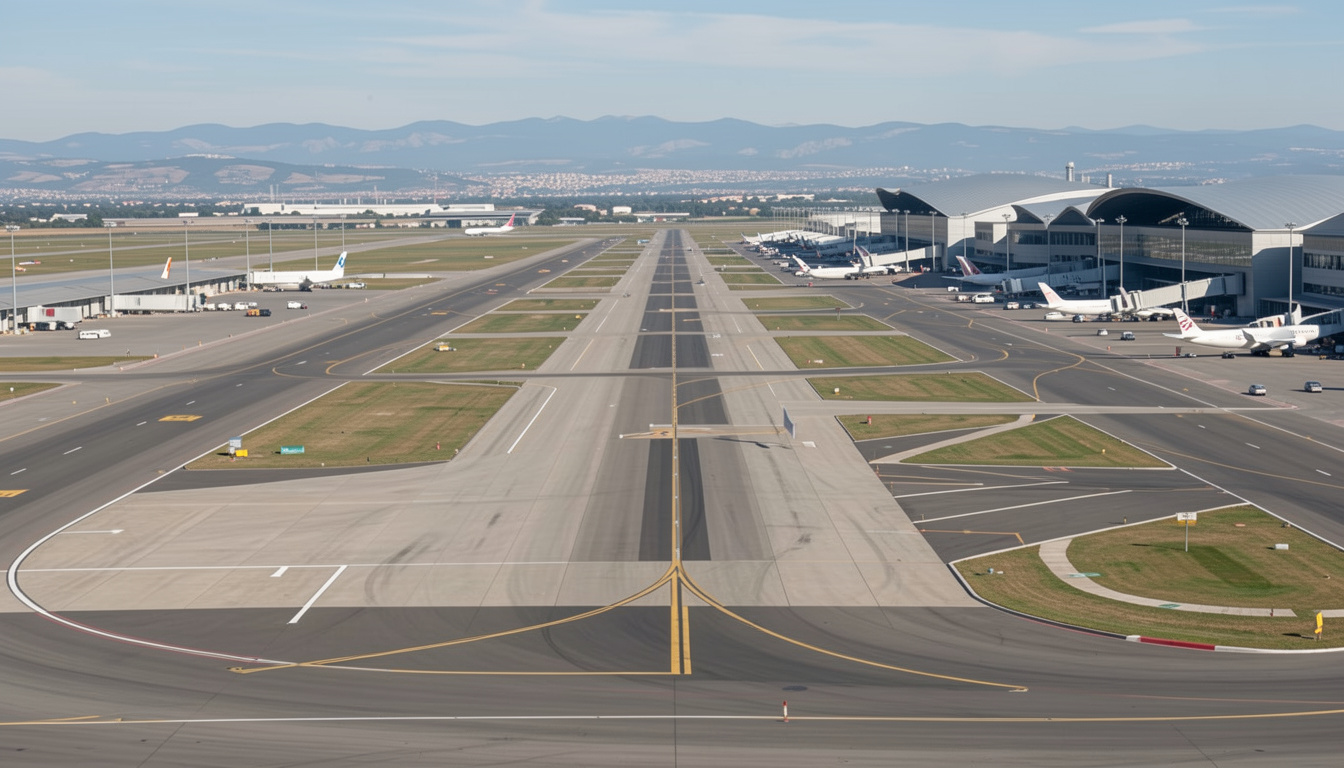
Cancun is one of the few airports in Mexico with two operational runways that can be used simultaneously. They are separated by more than 1,500 meters (approx. 5,000 ft), allowing one plane to land while another takes off without the wake turbulence of one affecting the other. This setup allows for more than 600 daily operations during peak days. That’s nearly one flight every two minutes!
From a dirt strip to global stardom

It’s hard to believe, but in the 1970s, Cancun’s “airport” was a dirt and wood strip located where Avenida Kabah (downtown) is today. The control tower was a rustic wooden structure that is now a historic monument. Seeing it now with four massive terminals is a testament to the region’s lightning-fast growth.
Terminal 4: A masterpiece of efficiency

Opened in 2017, Terminal 4 was designed to be “green” and ultra-efficient. It has the capacity to handle 9 million passengers a year on its own. If January 2026 was a success, it was largely because this terminal is operating at peak performance, connecting direct flights from places as far as Istanbul, Zurich, or Buenos Aires.
More international than the capital

While AICM (Mexico City) moves more total passengers, Cancun Airport usually wins in one specific category: international passengers. It is, by far, the main gateway for foreigners entering Mexico. This past January, while other airports were recovering from the post-holiday slump, Cancun was hosting aircraft from over 37 different airlines.
The “Tulum Effect” didn’t slow it down

Many analysts thought the opening of the new Tulum Airport (TQO) would take the shine off Cancun. The reality in 2026 is different: the market has “reconfigured.” Tulum is absorbing those heading directly to the southern Riviera Maya, but Cancun remains the undisputed giant for mass tourism and global connections.
What does this mean for your next trip?
If you’re planning to travel in the coming months, these record numbers offer a clear hint: the Caribbean is in high demand.
Anticipation is key: With over 2 million people passing through the gates in a single month, immigration and customs times can vary. Fortunately, E-Gate technology (electronic passports) has streamlined the process for U.S., Canadian, and Mexican citizens.
Total Connectivity: This massive flow ensures that transport is always available—ranging from the new Maya Train connecting to the airport to classic shuttles—but it also means hotel prices stay competitive due to high demand.
Conclusion: A giant that keeps growing

The fact that January 2026 is the second-busiest in history isn’t just a number on a spreadsheet; it’s the pulse of a destination that refuses to age. Cancun has gone from an ambitious project on a map to the epicenter of international tourism in Latin America.
The next time you walk through its halls, remember you are part of a historic statistic. You are in one of the most dynamic airports on the planet, where every landing is the start of an adventure and every takeoff is a promise to return.